
Construction Finance vs Project Finance in Real Estate
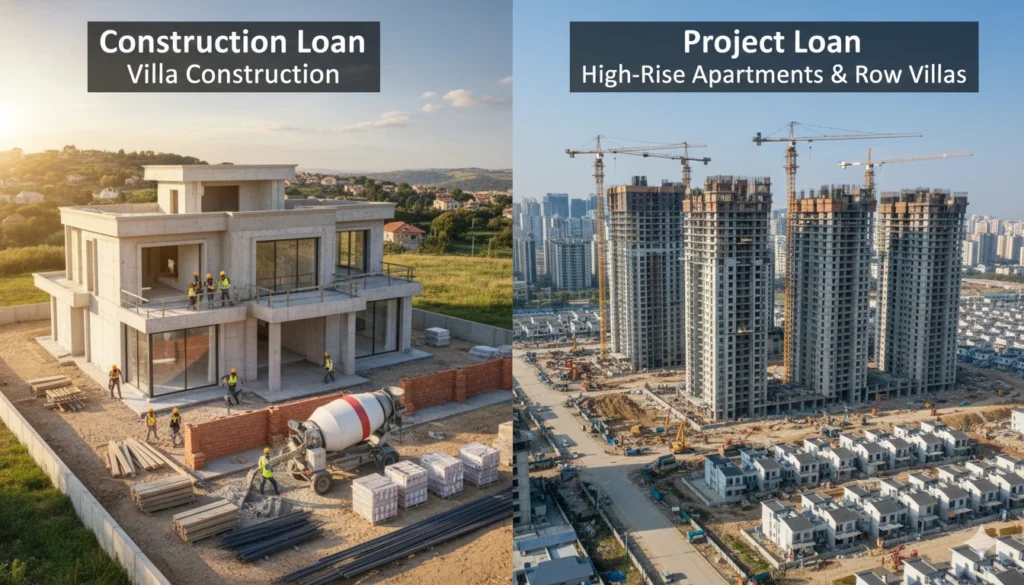
Real estate industry is growing globally, but financing remains one of the biggest hurdles for developers and investors. If you’re planning a residential apartment tower or a large commercial complex, understanding the Shades of construction finance vs project finance can make or break your project’s success.
What Is Construction Finance?
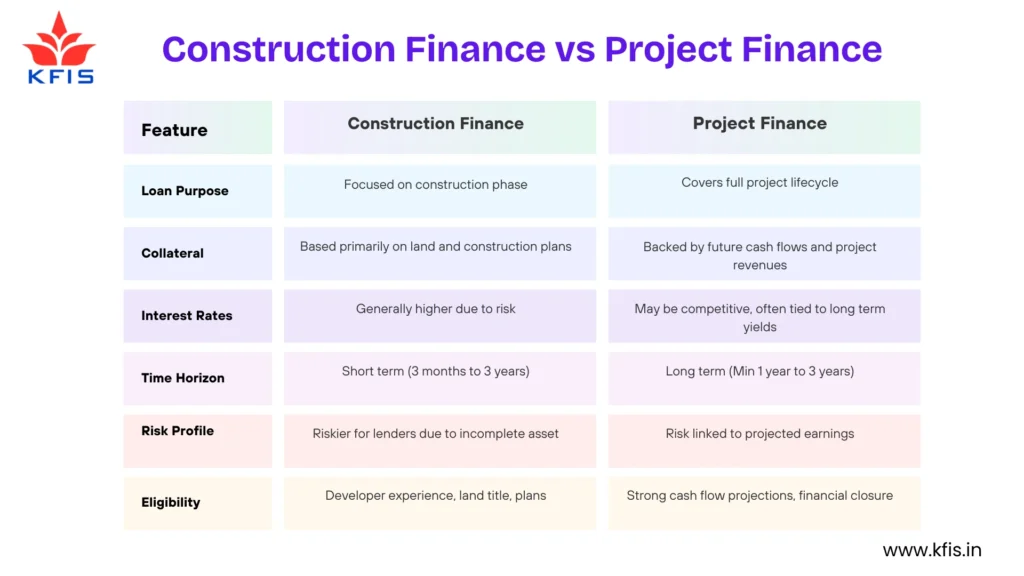
Construction finance refers to short term lending solutions designed to fund the development and building of a property from land acquisition and labor to materials and sanctions. Often termed a construction finance loan or simply construction loans, these financing options are tailored for landlords who are willing to construct their own building such as individual house, bungalows, commercial complex, malls,theatres, hospitals, marriage hall, hotels, school, colleges and any kind of captive use residential, commercial or industrial building, who are constructing new structures rather than buying existing ones.
A traditional mortgage which provides a lump sum to buy an existing property, construction finance works differently. It typically involves phased payouts that match progress milestones (e.g, foundation, framing, roofing), helping landlords manage their cash flow efficiently throughout the build cycle.
Key Features of Construction Finance
- Short Term Funding: Most construction finance loans are designed to cover the construction period, usually 3 months-2 years.
- Stage Based Disbursement: Funds are released in phases based on project milestones.
- Higher Interest Rates: Construction finance interest rates tend to be equals to traditional home loans because lenders carry higher risk on assets that aren’t yet complete. Typical construction loan interest rates today range from 6.5% to 18% p.a. depending on financial scale, credit worthiness and region.
- Eligibility Requirements: Lenders evaluate experience, land title, approvals, cash flow projections, and construction plans before approval.
Overall, real estate construction finance is a specialized form of credit to help developers complete their projects successfully, whether it’s a residential real estate construction loan, a commercial real estate project loan, or an industrial project loan.
What Is Project Finance?
Project finance in real estate takes a broader perspective. Instead of focusing only on the construction period, project finance structures long term capital for the entire lifecycle of a real estate development from construction through operation and revenue generation.
In project finance, the loan is backed primarily by the project’s future cash flows and assets, not the developer’s balance sheet. This means the projected income from selling or leasing units, rental flows, or commercial returns becomes the main collateral.
Key Features of Project Finance
- Long Term View: Unlike construction finance, project finance usually spans the full life of the project, including post completion phases.
- Cash Flow Based Collateral: The project’s future earnings, not just the developer’s credentials, support the financing.
- Large Capital Base: Best for big developments like mixed use complexes, commercial towers, public infrastructure, and integrated townships.
- Complex Documentation and Structuring: Project finance often involves multiple lenders, equity partners, and structured repayment mechanisms.
This financing is crucial for real estate project funding where the scale and expected returns justify a more comprehensive lending framework.
This construction finance vs project finance comparison is vital because mixing up the two can lead to under capitalized plans, missed deadlines, and higher financing costs.
Interest Rates for Construction vs Project Finance
Interest rates play a crucial role in real estate financing decisions. Both construction finance interest rates and project finance interest rates are influenced by market conditions, credit ratings, project type, and risk. Here’s what you need to know,
Construction Finance Interest Rates
Construction loans are generally priced higher than permanent loans due to the uncertainty associated with an unfinished property. In 2026, average interest rates for real estate construction finance typically fall between 10% and 18% p.a. for mid sized developers in India.
Factors affecting these interest rates include,
- Developer’s creditworthiness
- Project location and market demand
- Type of project (residential vs commercial)
- Loan to cost and debt coverage ratios
Project Finance Interest Rates
Project finance interest rates may be comparatively lower in large developments because long term revenue streams can secure cheaper capital. However, they remain tied to macroeconomic conditions and lender risk assessments.
When comparing construction finance vs project finance from an interest cost perspective, developers must evaluate how interest expenses impact overall profitability over time.
Types of Real Estate Construction and Project Loans
Real estate financing isn’t one size fits all. Developers can pursue various loan types,
1. Residential Real Estate Construction Loan
Ideal for housing projects, villas, and apartment complexes. These loans are usually shorter term, with interest only payments during construction phases.
2. Commercial Real Estate Project Loan
Used for shopping centers, office buildings, malls, and mixed use developments. These may involve both construction and long term cash flow funding.
3. Industrial Project Loan
Designed for warehouses, logistics parks, manufacturing facilities, and other large non residential projects.
4. Real Estate Project Funding through Project Finance
This includes capital for acquisition, construction, stabilization, and financing the operation phase, backed by revenue forecasts and lease contracts.
Each financing type has unique project finance eligibility criteria, often related to financial closure requirements, minimum equity contributions, and risk relief measures.
Project Finance Eligibility Criteria
Lenders impose specific standards before approving project finance,
- Strong feasibility study and cash flow projections
- Secure revenue streams (e.g., pre leases, sales pipelines)
- Reasonable Cashflows and GST sales returns
- Professional project management and contractor experience
- Appropriate equity participation
Meeting these criteria increases the chances of receiving favorable terms and more competitive project finance interest rates.
Global and Indian Market Context
The real estate sector is assured for massive growth. Global real estate investment is expected to hit record levels by 2030 as urbanization and infrastructure demand rush. Real estate construction finance plays a vital role in meeting this demand.
Regulatory bodies, including the Reserve Bank of India (RBI), have recently revamped project finance norms for real estate and infrastructure, reducing supply requirements for commercial and residential projects to ease lending pressures.
In the current higher interest rate environment with construction loan rates rising compared to pre 2020 levels developers must be strategic in choosing between construction finance and long term project finance.
Which Financing Option Should You Choose?
Choosing between construction finance and project finance depends on,
- Project duration: Short build time vs multi phase lifecycle
- Cash flow potential: Strong leasing and sales vs initial revenue uncertainty
- Risk tolerance: Ability to absorb higher interest costs vs structured long term yields
- Capital structure: Equity availability and passion for leverage
For smaller projects, it might be best to have clearly defined construction phases, like when building a residential block. For bigger projects, commercial complexes project finance, which is based on making money, often makes the financial framework more stable.
Conclusion
Developers, investors, and financial planners need to know the difference between construction finance and project finance in real estate. Each type of financing is best for a different stage of a project and level of risk. You can pick the best way to finance a real estate project to know things like interest rates, cash flow needs, eligibility requirements, and long term cash flow potential.
If you’re exploring real estate construction loans, commercial real estate project loans, or the broader project finance in real estate structure, informed decisions backed by solid financial planning can significantly influence your profitability and growth.
Explore our multiple Finance Services
-
Business Loan
-
MSME Loan
-
Home Loan
-
Loan against Property
-
Project Finance
-
Doctor Loan
-
Medical Equipment Loan
-
Working Capital Loan
-
Industrial Equipment Loan
-
Supply Chain Finance
-
Corporate Loan
-
Commercial Vehicle Loan
-
Construction Equipment Loan
-
Real Estate Project Finance
-
Loan for Schools & Colleges
FAQ’s
1. What is project finance in real estate?
Project finance is a long term funding structure where repayment is based on the project’s future cash flows rather than the sponsor’s balance sheet, often using non recourse loans secured by project assets.
2. What is construction finance?
Construction finance is short term funding provided to landowners to cover construction costs, materials, and labor typically repaid upon project completion.
3. How is construction finance different from project finance?
Construction loan funds the build phase, whereas project finance covers long term funding with repayment from future revenues project finance uses structured cash flows and risk allocations.
4. What are construction loans?
Construction loans are specialized captive user loans that provide staged funding during the build process, usually released as the construction stage reaches milestones.
5. What interest rates apply to construction finance loans?
Construction finance interest rates in India typically range from ~10% to ~18% p.a., depending on lender, project risk, and credit profile.
6. What are typical construction loan interest rates in 2026?
Many banks and NBFCs offer construction loan rates between ~8.5% and 11.5% p.a. for residential and commercial projects.
7. How do project finance interest rates compare?
Project finance interest rates depend on project cash flows, risk, and market conditions. Long term project loans often have structured rate terms based on credit and tenor.
8. What is real estate construction finance?
Real estate construction finance refers to funding specifically for building residential, commercial, or industrial properties often tied to construction milestones.
9. What are real estate project loans?
These are loan products designed to finance construction costs, often with interest only payment options during construction and EMIs post completion.
10. What is real estate project funding?
Real estate project funding includes construction finance, project finance, and other capital sources used to finance property development from land purchase to completion.
11. What types of commercial real estate project loans exist?
Commercial real estate project loans finance malls, offices, hotels, hospitals, schools, colleges and warehouses, typically with structured repayments and competitive interest rates.
12. What is a residential real estate construction loan?
A residential construction loan is specifically for building homes, villas, or apartments and pent houses with eligibility often tied to credit score, income, and project plan.
13. Do industrial project loans differ from other real estate loans?
Yes, industrial project loans finance factories, warehouses, and facilities, with eligibility based on project viability, cash flow, and collateral.
14. What factors influence construction finance eligibility criteria?
Criteria include project cost estimates, developer experience, credit score, collateral, financial strength, and business track record.
15. What are project finance eligibility criteria?
Project finance eligibility typically requires a strong project plan, predictable cash flow forecasts, risk mitigation structures, and appropriate security.
16. What is Loan to Cost (LTC) and why is it relevant?
Loan to Cost (LTC) shows the percentage of project cost financed by the loan many lenders offer up to ~75% of construction cost, influencing interest rates and risk.
17. Are interest rates for construction loans higher than standard loans?
Yes because construction risk is higher, lenders usually set higher rates than traditional mortgages or term loans.
18. Can construction loan interest be capitalized during the building phase?
In project finance models, interest during construction may be capitalized into the project cost, affecting overall funding structures.
19. Why do lenders require higher security for project finance?
Project finance focuses on future cash flows, so lenders secure loans with project assets and contracts to manage risk.
20. How has India’s RBI changed project finance regulations?
New RBI norms reduce provisioning requirements for construction and commercial real estate (CRE) project loans, encouraging lending and reducing stress recognition.
Project finance is a long term funding structure where repayment is based on the project’s future cash flows rather than the sponsor’s balance sheet, often using non recourse loans secured by project assets.
Construction finance is short term funding provided to landowners to cover construction costs, materials, and labor typically repaid upon project completion.
Construction loan funds the build phase, whereas project finance covers long term funding with repayment from future revenues project finance uses structured cash flows and risk allocations.
Construction loans are specialized captive user loans that provide staged funding during the build process, usually released as the construction stage reaches milestones.
Construction finance interest rates in India typically range from ~10% to ~18% p.a., depending on lender, project risk, and credit profile.
Many banks and NBFCs offer construction loan rates between ~8.5% and 11.5% p.a. for residential and commercial projects.
Project finance interest rates depend on project cash flows, risk, and market conditions. Long term project loans often have structured rate terms based on credit and tenor.
Real estate construction finance refers to funding specifically for building residential, commercial, or industrial properties often tied to construction milestones.
These are loan products designed to finance construction costs, often with interest only payment options during construction and EMIs post completion.
Real estate project funding includes construction finance, project finance, and other capital sources used to finance property development from land purchase to completion.
Commercial real estate project loans finance malls, offices, hotels, hospitals, schools, colleges and warehouses, typically with structured repayments and competitive interest rates.
A residential construction loan is specifically for building homes, villas, or apartments and pent houses with eligibility often tied to credit score, income, and project plan.
Yes, industrial project loans finance factories, warehouses, and facilities, with eligibility based on project viability, cash flow, and collateral.
Criteria include project cost estimates, developer experience, credit score, collateral, financial strength, and business track record.
Project finance eligibility typically requires a strong project plan, predictable cash flow forecasts, risk mitigation structures, and appropriate security.
Loan to Cost (LTC) shows the percentage of project cost financed by the loan many lenders offer up to ~75% of construction cost, influencing interest rates and risk.
Yes because construction risk is higher, lenders usually set higher rates than traditional mortgages or term loans.
In project finance models, interest during construction may be capitalized into the project cost, affecting overall funding structures.
Project finance focuses on future cash flows, so lenders secure loans with project assets and contracts to manage risk.
New RBI norms reduce provisioning requirements for construction and commercial real estate (CRE) project loans, encouraging lending and reducing stress recognition.